


How Often Should Children Wash Their Hair During Sports Season?
Practice on Tuesday, a game on Saturday, and a lot of sweat in between. Here's how to fit hair washing into a full season.

- Most children ages 8 to 11 only need shampoo once or twice a week. A sports schedule doesn't change that as much as you'd think.
- After most practices, a good rinse with water is enough. Save shampoo for when the scalp looks or feels oily.
- Dry, curly, and coily hair usually does best with shampoo every 7 to 10 days, plus a rinse and conditioner after a sweaty day.
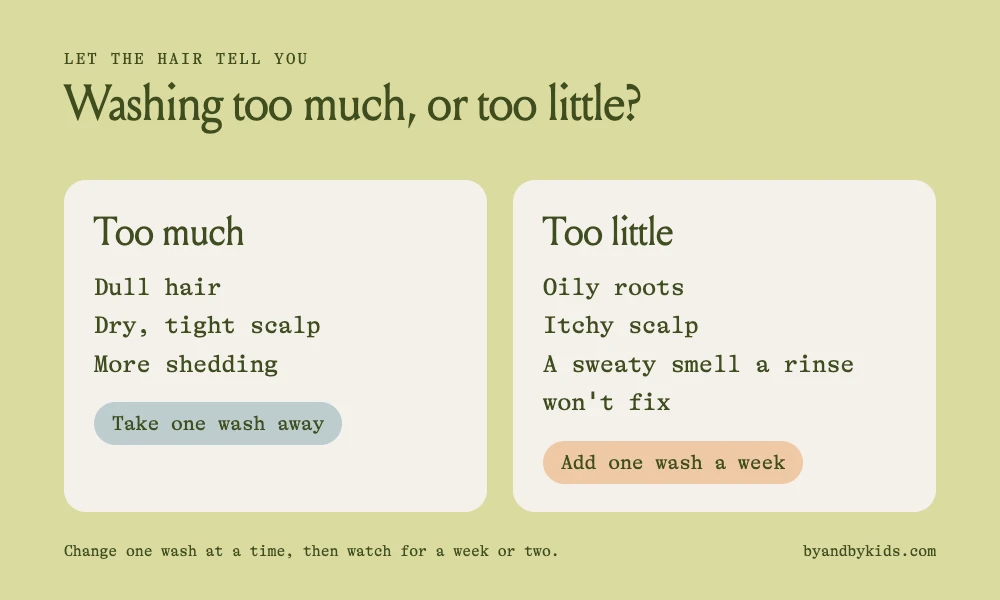
- Let the hair tell you. Oily roots mean add a wash. Dull, dry hair means take one away.

How Often Should Children Wash Their Hair?
Dermatologists look at three things: age, hair type, and how active your child is[1]. There's no single magic number. A ten-year-old with fine, straight hair who plays soccer four days a week needs a different plan than a seven-year-old with coily hair who dances once a week.
Here's the baseline the American Academy of Dermatology gives for children 8 to 12[1]:
- Ages 8 to 11: shampoo once or twice a week.
- Around age 12 or the start of puberty, with straight or oily hair and an active schedule: every other day or daily.
- Dry or curly hair, including hair in braids: every 7 to 10 days.
Younger children usually need even less. For most children under 12, once or twice a week is plenty until puberty begins[2].
Why Age Changes the Answer
Scalp oil comes from tiny glands that sit next to each hair. In early childhood, those glands stay small and make very little oil. Around age 9, hormones wake them up, and oil keeps climbing through the teen years[3].
That's why a second grader can go days between washes and look fresh, while a sixth grader's roots can look greasy by the next afternoon. Children's skin isn't a smaller version of yours. It changes on its own timeline, and so does the scalp.
Does Sports Season Change the Schedule?
Sometimes. Sweat is mostly water and salt. When it sits on the scalp for a long time with oil and heat, it can leave the scalp itchy and uncomfortable[4]. Dermatologists say children should wash up when they get sweaty, dirty, or come out of a pool[2]. That doesn't always mean shampoo, though.
It helps to think in two kinds of days.
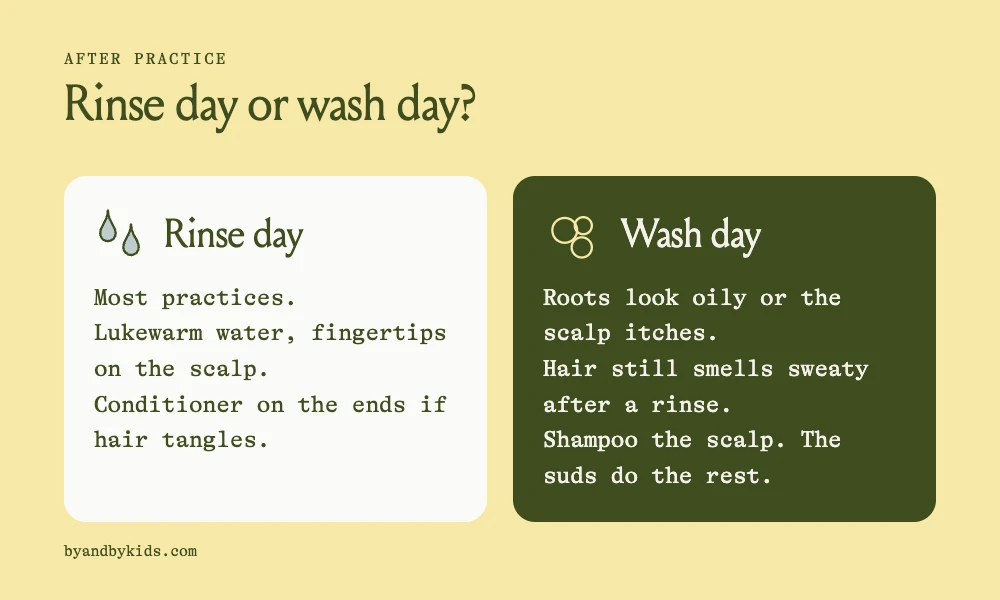
Rinse days. After most practices, rinse the hair and scalp well with lukewarm water. Rub the scalp with fingertips to loosen sweat and salt. Add a little conditioner to the ends if hair tangles. This clears the day away and leaves the scalp's natural oils in place.
Wash days. Shampoo when the roots look oily, the scalp itches, or hair still smells like the field after a rinse. Focus the shampoo on the scalp. The suds that run down are enough for the rest. For older children with straight or oily hair who play hard, wash days may come every other day during the season[1].
Hair Type Matters as Much as the Sport
Straight or fine hair. Oil shows up fastest here, since it slides down a straight strand easily. These children are most likely to need extra wash days in season. Keep conditioner light and on the ends. Our guide to conditioner for fine hair has more.
Wavy hair. The middle ground. Start with the baseline for your child's age and adjust from there.
Curly and coily hair. This hair tends to be drier and more fragile. Dermatologists suggest shampoo about once a week or every other week, with conditioner every time[5]. After a sweaty practice, rinse and condition instead of doing a full shampoo[1].
Braids, twists, and protective styles. Plan on a full wash every 7 to 10 days[1]. Between washes, a gentle rinse at the scalp clears sweat. Let the style dry all the way through before bed.
By Sport
Soccer and flag football. Sweat, sunscreen, grass, and the occasional mud puddle. Most practices are rinse days. A muddy game day is a wash day, whatever the calendar says.
Swim. Pool water is its own thing. Wet the hair with clean water before getting in, so it soaks up less pool water[6]. Rinse right after swimming, then wash[7]. A swim cap helps too. Curly and coily hair can rinse and condition after swim instead of shampooing every time[1].
Dance. Buns, gel, and hair spray on recital weekends. Product builds up fast, so the night after a show is a wash day. On regular class days, take the bun down soon after and give the scalp a rinse.
Sports don't split neatly by boys and girls, and neither does hair. A son in ballet with a gelled bun and a daughter in flag football with a sweaty ponytail can need the very same plan.
What If My Child Has Two Practices in One Day?
One wash is enough. Rinse after the first practice and save the shampoo for the end of the day, if the scalp needs it. Two shampoos in one day is usually more than a child's scalp needs.
Signs You're Washing Too Much or Too Little
Too much: hair looks dull, feels dry, or sheds more than usual[1]. The scalp may feel tight or flaky and dry.
Too little: roots look oily, the scalp itches, or there's a sweaty smell that a rinse doesn't fix[1].
Change one wash per week at a time, then watch for a week or two[1]. Weather counts too. Dry winter air and hot summer days can both shift the schedule. If your child's hair or scalp still seems too oily or too dry, check in with a dermatologist. Children with eczema or another skin condition should follow the plan their dermatologist gives them[2].
What a Season Week Can Look Like
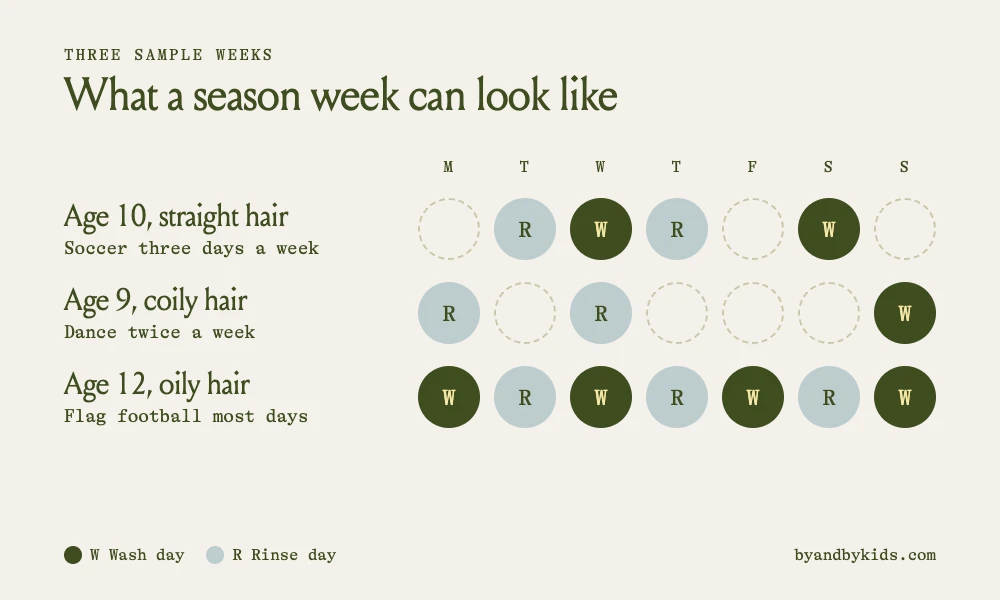
A ten-year-old with straight hair, soccer three days a week. Rinse after Tuesday and Thursday practice. Shampoo after Saturday's game and once midweek. That's two wash days, right in line with the guidance for her age.
A nine-year-old with coily hair, dance twice a week. Rinse and condition after Monday and Wednesday class. One full wash on Sunday. On recital weekends, the wash moves to the night after the show.
A twelve-year-old with oily hair, flag football most days. Wash every other day, with rinses in between. If his scalp still looks oily, add one more wash day a week.
Small Things That Help
- Keep a wide-tooth comb in the sports bag for after-practice tangles.
- Use lukewarm water. Very hot water can leave the scalp dry.
- Dry thick hair and braids fully before bed when you can.
- Wash hats, headbands, and pillowcases often during the season.
Frequently Asked Questions
Should my child wash their hair after every practice? Usually not with shampoo. A good rinse after practice clears sweat. Shampoo when the roots look oily or the scalp itches.
Is it bad to wash a child's hair every day? For most children under 12, daily shampoo is more than they need and can leave hair dry. Older children with oily hair and a busy sports schedule may need it every other day or daily[1]. A gentle shampoo makes frequent washing easier on the scalp.
What if my child has two practices on the same day? Rinse after the first, and wash once at the end of the day if needed.
Does hair type matter more than the sport? Often, yes. A child with coily hair who plays every day may still only need a full shampoo once a week. A child with straight, oily hair may need more, even with a lighter schedule.
Is a sweaty scalp bad for hair? Sweat on its own is fine. It's sweat left sitting for hours with oil and heat that can make the scalp itchy[4]. A rinse soon after practice takes care of most of it.
How We Approached It
We made Star Light Shampoo and Star Shine Conditioner for children ages 3 to 12, and for weeks like these. Both are fragrance-free and gentle enough for the extra washing a season can bring. For more on what to look for, see our guide to shampoo for a sensitive scalp.
Cultivate Clean. Celebrate Childhood.
- How often do children need to wash their hair?, American Academy of Dermatology, 2023
- Dermatologist offers tips to help parents figure out how often children need to bathe, News-Medical, 2016
- Physiology, Sebaceous Glands, StatPearls, 2022
- Is Your Heated Workout Ruining Your Hair? Here's What Hair Experts Say, NBC Select, 2026
- Black hair: Tips for everyday care, American Academy of Dermatology
- Protect Your Hair From Chlorine the Next Time You Go Swimming, Cleveland Clinic
- Must-try summer hair care, American Academy of Dermatology


Join the List
Notes on hair, scalp, and the years in between, plus first word when By & By launches in Spring 2027.
Join the List
 ×

Be There From the Start.
For the Years in Between
Notes on hair, scalp, and the years in between, plus first word when Star Light Shampoo and Star Shine Conditioner arrive.
Thank you. You're on the list.
Something went wrong. Please try again in a moment.