


Safe Conditioner for Children's Fine Hair: What to Look For
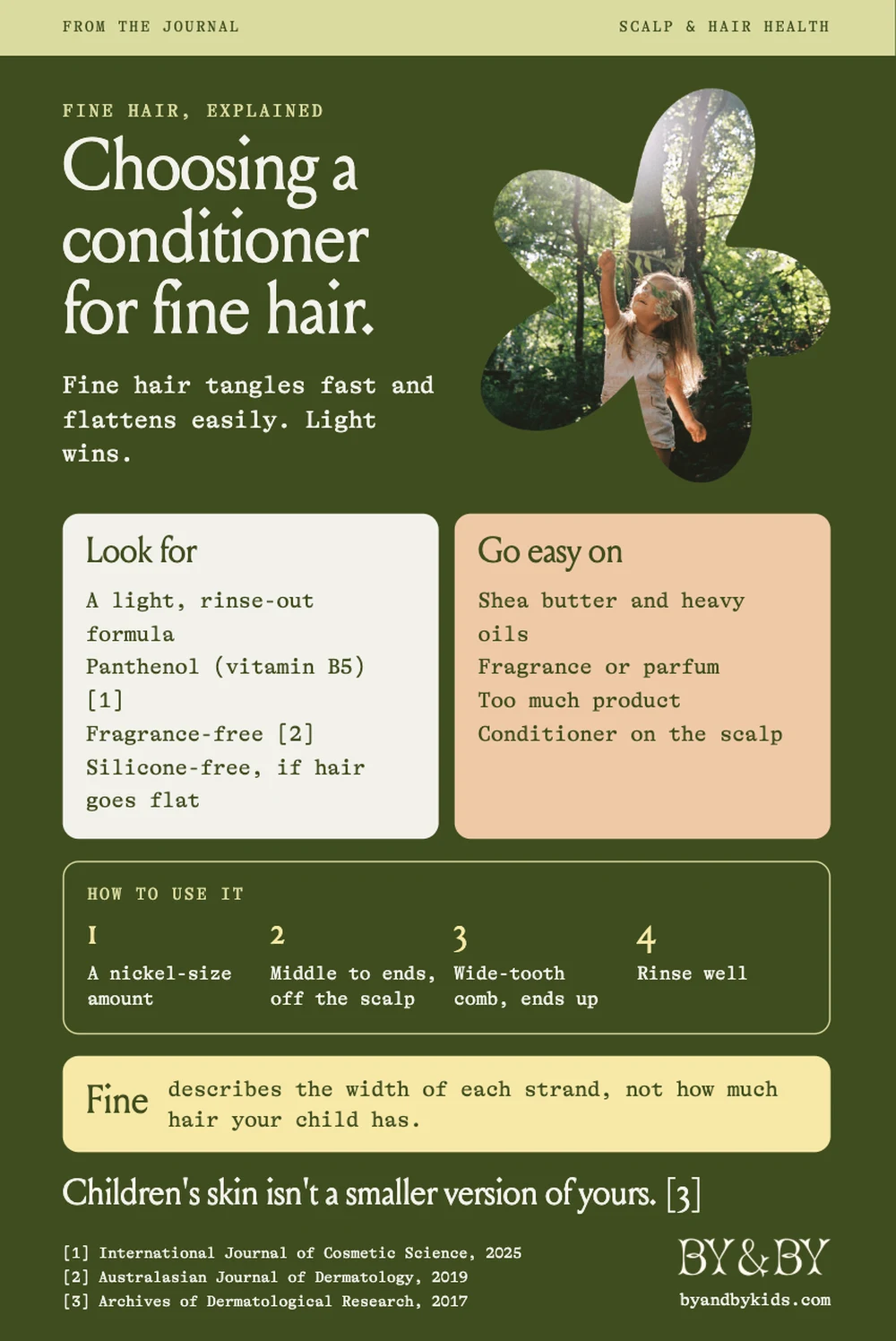
Fine hair tangles fast and flattens easily. Here's how to find a conditioner that helps without weighing it down.

- Yes, fine hair benefits from conditioner. A light, rinse-out formula used on the ends makes combing gentler.
- Skip fragrance, harsh sulfates, and heavy butters. They can irritate a sensitive scalp or leave fine hair limp.
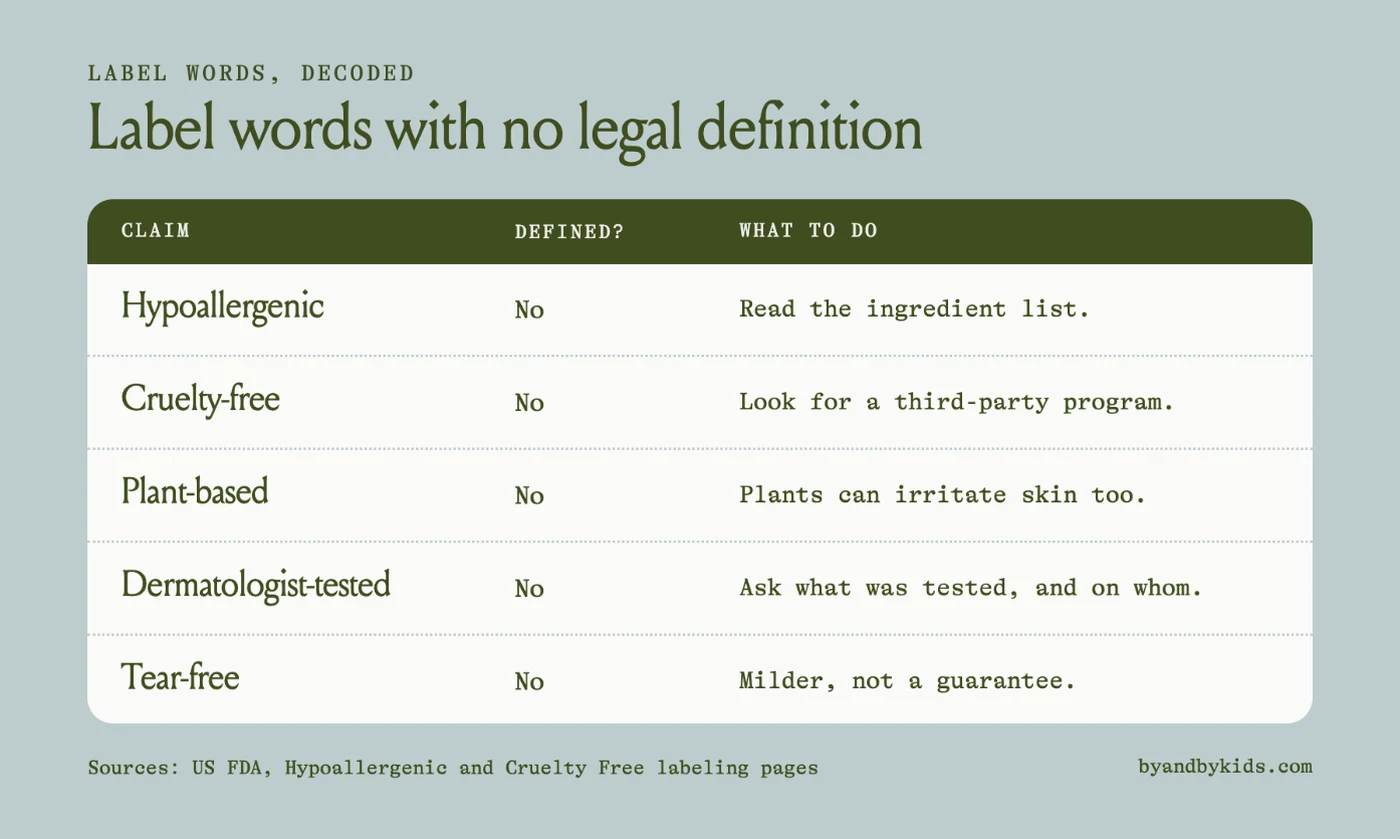
- Words like "hypoallergenic" and "cruelty-free" have no legal definition in the US. Read the ingredient list instead.
Does a Child With Fine Hair Need Conditioner?
Usually, yes. Conditioner's main job is to cut down friction between strands so a comb can glide through[1]. Fine hair knots easily, and wet hair is more fragile than dry hair[2]. So a little conditioner after every wash makes the comb part of bath time a lot less painful.
The trick is choosing one that's light enough. Fine strands are thin, so heavy formulas sit on top and make hair look flat or greasy by the next morning[3].
What Makes Fine Hair Different
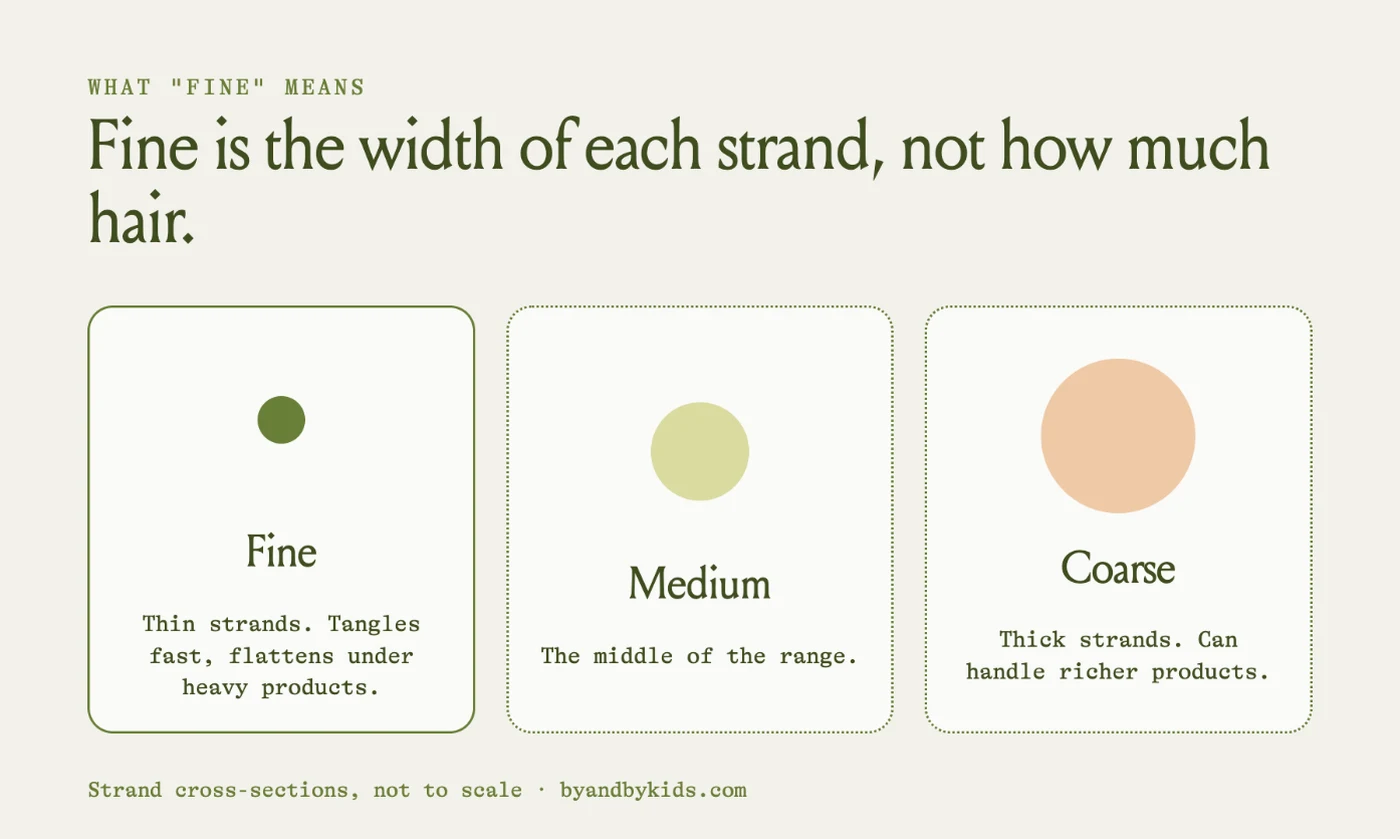
"Fine" describes the width of each strand, not how much hair your child has. A child can have lots of hair that's still fine. Fine children's hair tends to:
- Tangle at the nape and behind the ears
- Get oily at the roots faster
- Lose its bounce under heavy products
That's why the best conditioner for fine hair is less about richness and more about balance.
What to Look For in a Conditioner for Fine Hair
A light, hydrating conditioner. A hydrating conditioner for fine hair should add moisture without feeling thick or coating. If it leaves hair heavy or greasy, it's too rich.
A rinse-out formula first. Rinse-out conditioners do the heavy lifting in the bath and wash away the excess. A leave-in conditioner or a light detangler spray can help on busy mornings, but most fine hair only needs a small amount.
Light conditioning ingredients. Panthenol, also called provitamin B5 or vitamin B5, is a small molecule that can move into the hair strand. Research suggests it may help hair hold up better under stress[4]. Aloe vera and light oils like jojoba oil are also common in lighter formulas.
Go easy on rich ingredients. Shea butter and coconut oil can be great for thick or curly hair. Coconut oil is one of the few oils shown to get inside the hair and reduce protein loss during washing[5]. On fine hair, though, rich butters and oils can weigh strands down. If you love coconut oil, try a tiny amount on the ends before a wash instead of in a daily conditioner.
Silicone-free can help. Silicones make hair feel slippery and smooth. Whether they build up depends on the type of silicone and the hair[3]. If your child's fine hair goes flat a day after washing, a silicone-free conditioner is worth a try.
What to Leave Out for Sensitive Skin and a Sensitive Scalp
Fragrance. In patch tests of children, fragrance is the most common cause of skin allergy[6]. For a child with eczema, dermatologists recommend fragrance-free products over "unscented" ones. Fragrance-free means no fragrance at all, even the kind you can't smell[7].
Harsh sulfates. Sulfates are cleansers, so they mostly matter in shampoo. Since shampoo and conditioner are used together, it makes sense to check both bottles.
Parabens and phthalates. Parabens are preservatives that keep bacteria from growing in a product. The FDA says it has no information showing that parabens, as used in cosmetics, affect human health[8]. It says the same about phthalates[9]. Many families still choose paraben-free products, and the EU restricts some parabens and phthalates. If paraben-free matters to you, the ingredient list will tell you.
What the Label Words Really Mean
Tear-free. This usually means milder cleansers that are less likely to sting. It doesn't mean a product can never bother the eyes[10]. It's mostly a shampoo claim, not a conditioner one.
Hypoallergenic. There's no federal standard for this word. It means whatever the company wants it to mean, and companies don't have to prove it to the FDA[11].
Dermatologist-tested. This tells you a dermatologist was involved in testing. It doesn't tell you what was tested, on whom, or what the results were. It's fair to ask the brand.
Cruelty-free. There's no legal definition for this one either. Some brands use it for the finished product even if ingredients were tested on animals by suppliers[12]. Third-party programs like Leaping Bunny certify brands that don't test at any stage.
Plant-based. This has no set definition. A plant-based formula isn't automatically gentler. Many plant extracts and essential oils can irritate sensitive skin.
Gluten-free. Gluten in a conditioner mostly matters for children with celiac disease who might get product near their mouth. If that's your family, ask your pediatrician.
Baby Shampoo, Adult Conditioner, or Something in Between?
Baby shampoo is made for babies, and adult conditioner is made for adult hair. Children ages 3 to 12 sit in between. Children's skin isn't a smaller version of yours. The skin barrier keeps maturing through the early years[13]. So the best products for these years are gentle like baby care, with enough conditioning to handle real tangles.
How to Use Conditioner on Fine Hair
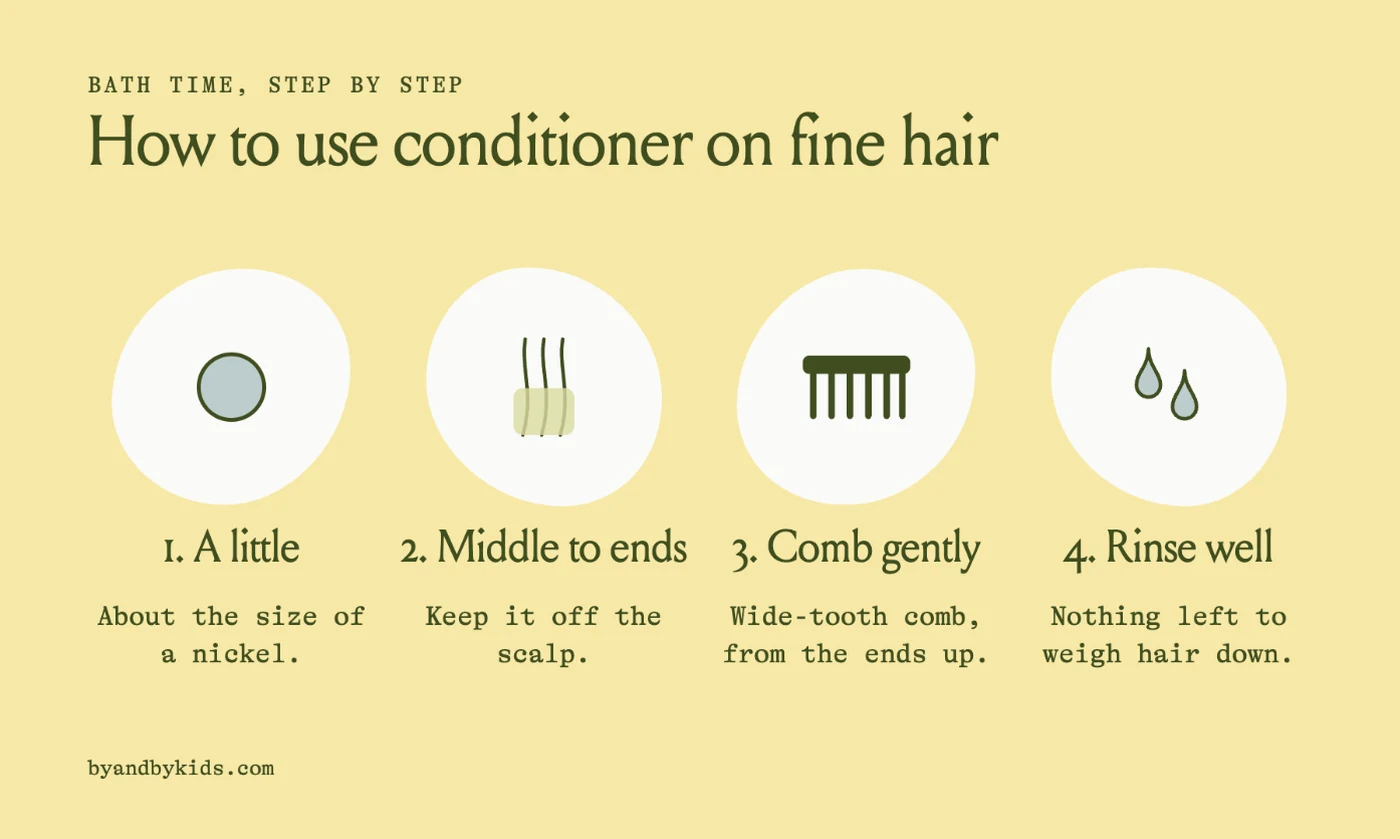
- Squeeze out a small amount, about the size of a nickel.
- Smooth it from the middle of the hair to the ends. Keep it off the scalp.
- Comb through gently with a wide-tooth comb while the conditioner is still in. Start at the ends and work up.
- Rinse well, so nothing is left behind to weigh hair down.
- On busy mornings, a light mist of detangler spray on the ends can help.
Frequently Asked Questions
Can children use adult conditioner? They can, but many adult formulas include fragrance and heavier ingredients. A gentle, fragrance-free conditioner made for children is a better fit for a developing scalp.
Is leave-in conditioner safe for children? A light, fragrance-free leave-in is fine for most children. Use a little on the ends, not the scalp.
What's the difference between a detangler spray and conditioner? Conditioner goes on in the bath and rinses out. A detangler spray is a lighter leave-in for dry or damp hair between washes.
Is coconut oil good for fine hair? In small amounts, yes. It can help protect hair during washing[5], but too much can make fine hair look greasy.
Does fine hair need conditioner every wash? Most fine hair does well with a little conditioner each wash, used only on the ends.
How We Approached It
We made Star Shine Conditioner to pair with Star Light Shampoo. Both are fragrance-free and pH-balanced, and our shampoo leaves out the harsher sulfates. Star Shine is light enough for fine hair and made to help a comb glide through after the bath, without leaving hair flat.
Cultivate Clean. Celebrate Childhood.
- Conditionally Yours: Hair Conditioner Formulations, UL Prospector, 2018
- Children's Hair, Philip Kingsley
- Busting Hair Conditioner Myths: Build-Up, Silicones, Weighing Hair Down, Lab Muffin Beauty Science
- Strengthening benefits of panthenol for hair: Mechanistic evidence from advanced spectroscopic techniques, International Journal of Cosmetic Science, 2025
- Effect of mineral oil, sunflower oil, and coconut oil on prevention of hair damage, Journal of Cosmetic Science, 2003
- Allergic contact dermatitis in children and proposal for an Australian Paediatric Baseline Series, Australasian Journal of Dermatology, 2019
- How can I find eczema friendly products?, American Academy of Dermatology
- Parabens in Cosmetics, US Food and Drug Administration
- Phthalates in Cosmetics, US Food and Drug Administration
- Why doesn't tear-free shampoo sting your eyes?, HowStuffWorks
- Cosmetics Safety Q&A: Hypoallergenic, US Food and Drug Administration
- "Cruelty Free"/"Not Tested on Animals", US Food and Drug Administration
- Change in skin properties over the first 10 years of life: a cross-sectional study, Archives of Dermatological Research, 2017


Join the List
Notes on hair, scalp, and the years in between, plus first word when By & By launches in Spring 2027.
Join the list
 ×

Be There From the Start.
for the years in between
Notes on hair, scalp, and the years in between, plus first word when Star Light Shampoo and Star Shine Conditioner arrive.
Thank you. You're on the list.
Something went wrong. Please try again in a moment.